Indian family empires have long played a pivotal role in shaping the country’s business environment. Despite shifts in governance and market structures, these conglomerates continue to wield significant influence. Today, Indian family-run businesses account for nearly 90% of listed companies in the country, far higher than in Western economies. While transitions to professional management are emerging, the legacy and power of family-run enterprises remain deeply ingrained in Indian commerce.
The Legacy of Indian Family Empires
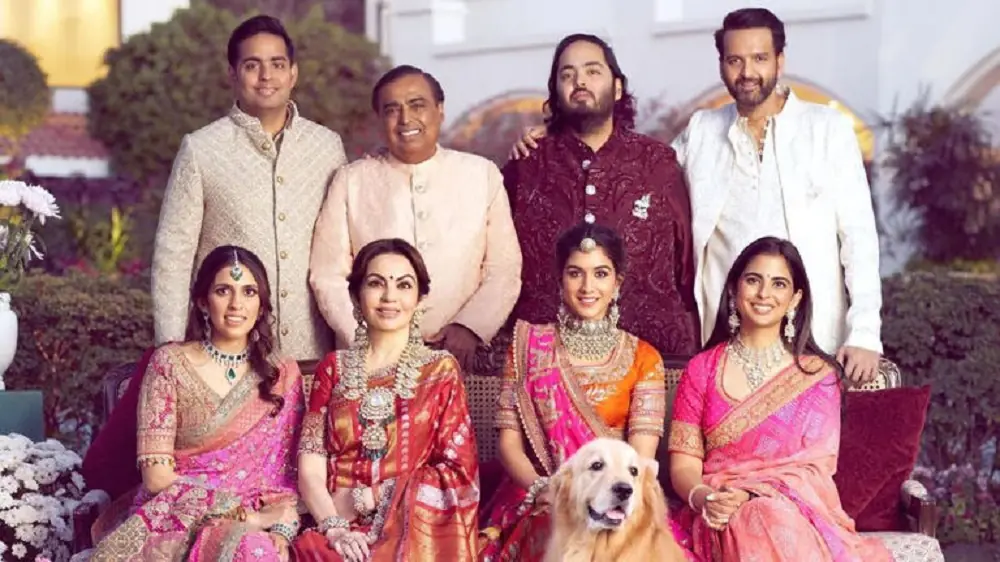
Reliance Industries, one of India’s largest conglomerates, exemplifies the enduring power of family empires. Founded by Dhirubhai Ambani, the business has been managed by his son, Mukesh Ambani, for over two decades. Under his leadership, Reliance has grown into one of the most valuable companies globally. Despite signs of succession planning, with key employees poised to take over management, Ambani’s children are expected to retain ceremonial roles, highlighting the family’s ongoing presence.
The story of Reliance is not unique. Many Indian family businesses, including the Tata Group and Mahindra & Mahindra, have undergone generational transitions while maintaining family control. Ratan Tata’s retirement in 2012 marked the end of family leadership at Tata, but his legacy continues to shape the conglomerate’s operations. Similar trends can be observed at Mahindra, where Anand Mahindra passed the torch to professional managers in 2020, illustrating the blend of tradition and modern management that defines many of these family-run businesses.
Succession Feuds and Corporate Splits
Indian family empires are known not just for their business acumen but also for internal conflicts that often lead to corporate restructuring. Succession battles, such as the one between Mukesh and Anil Ambani, are common in family-run enterprises. These feuds can result in the splitting of conglomerates into separate entities, allowing each family faction to manage their share of the empire. This phenomenon underscores the unique dynamics of family-run businesses, where personal relationships intertwine with corporate governance.
In some cases, marriages between family members of different business houses create alliances that further strengthen their commercial influence. These alliances, both personal and business-related, provide a network that is difficult for outside competitors to penetrate. Global companies like Disney have recognized the importance of partnering with well-connected Indian families to navigate the country’s complex business environment.
Resilience Amid Regulatory Challenges
The dominance of Indian family empires can be traced back to the post-independence period when the government implemented regulations to curb the concentration of wealth. Despite efforts to nationalize industries and reserve sectors like mining and telecommunications for the state, family businesses managed to thrive. The heavy regulatory burden in India often works to their advantage, as these businesses can leverage strong political and financial connections to navigate the complex system. Their ability to attract capital and negotiate with various stakeholders allows them to remain competitive in an increasingly globalized market.
Additionally, the absence of inheritance taxes since 1985 has enabled these families to retain control across generations, unlike many Western countries where taxes often dilute wealth. This regulatory framework has reinforced the role of Indian family empires, allowing them to grow and expand with minimal interference.
Signs of Change in Indian Family Empires

While family-run businesses continue to dominate, there are signs of change. Several major conglomerates, including Cipla and Haldiram’s, are rumored to be up for sale, indicating that the grip of family ownership may loosen in some sectors. Private equity firms have begun to view India’s family businesses as ripe for restructuring, providing opportunities for growth and innovation through external investment.
Furthermore, India’s tech scene is burgeoning, with startups eager to challenge the established order. New business registrations are rising, and entrepreneurs are disrupting traditional industries. Although these developments signal the potential for shifts in the business landscape, the pace of change is expected to be gradual.
A Slow Transition to Professional Management
The gradual shift from family-led management to professional leadership is becoming more common among India’s largest corporations. For instance, when Harsh Mariwala stepped down from his role at Marico in 2014, he handed over control to a non-family member, marking a significant departure from the traditional family management structure. Similarly, JSW, India’s largest steel company, is currently preparing for its second round of succession planning, emphasizing the need for professional governance while maintaining family involvement.